

One of Darjeeling's most picturesque and spiritually enriching sites is Observatory Hill. Here, religious harmony, natural beauty, and colonial history converge. This incredible hilltop rises above Darjeeling's busy streets, offering visitors a revitalizing stroll, holy temples, prayer flags, age-old customs, and rewarding views of the Eastern Himalayan terrain.
Observatory Hill Darjeeling, is a location where the Queen of the Hills' deeply ingrained cultural identity and the peace of nature embrace each other. The location is close to Chowrasta (The Mall), especially noted for the holy Mahakal Temple. This temple draws Hindu pilgrims and tourists all year long.
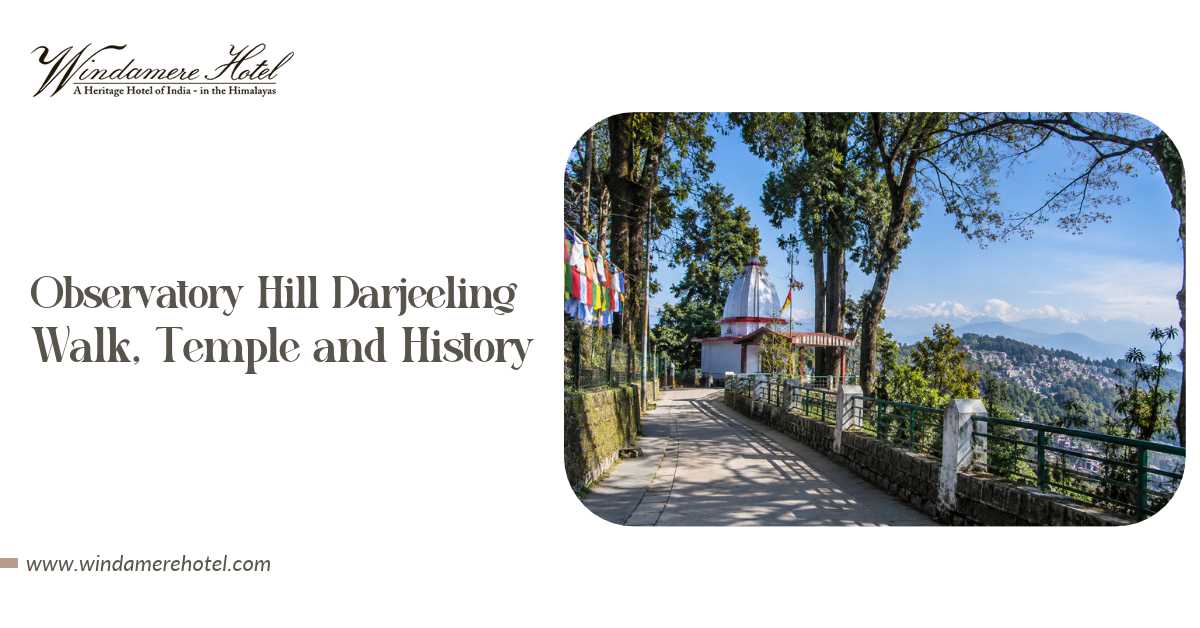
The hill is a major symbol of interfaith harmony because it is also connected to Buddhist religious traditions. You’ll encounter colorful prayer flags, small shrines, bells, and a serene devotional mood as you travel the meandering walk through beautiful foliage.
What is the Location of Observatory Hill in Darjeeling?
The location is near the remarkable Chowrasta Mall Road in the center of Darjeeling, Northern West Bengal, India. Its central location makes it one of the most convenient places to explore the town on foot.
Above the town, the hill offers a tranquil escape from the bustling market streets, shops, and tourist attractions. It is a famous viewpoint because of its elevated location, especially for tourists who wish to experience the mountain environment of Darjeeling without going far from the town center.
Why explore Observatory Hill?
- Visit the renowned Mahakal Temple.
- Experience Buddhist and Hindu religious traditions.
- Take a stroll through lush vegetation.
- Learn about an aspect of Darjeeling's past.
- Admire the panorama of the nearby mountains and hills.
- Discover one of the most notable cultural sites in Darjeeling.
The Promising Walking Path to Observatory Hill
A stroll from Chowrasta is a rewarding way to see Observatory Hill. This hilltop location is perfect for a Darjeeling sightseeing itinerary because it can be explored on foot, unlike attractions that require a lengthy journey.
So your walking route starts close to Chowrasta, the popular open public space encircled by stores, cafes, and buildings from the colonial era. You can proceed to the summit by following the uphill route.
The tall trees and lush flora that surround the road will uplift the mood of the journey. The noises of the bustling town gradually fade as you ascend. Bells and tiny religious buildings enhance the area's spiritual splendour, while vibrant prayer flags float in the mountain breeze.
Wear comfortable walking shoes because the pathway has steps and uneven areas. You should take your time even though the climb is not very long, especially if you are hiking with kids or elderly family members.
What Makes the Walk Special?
The hike is very enjoyable because of the peaceful surroundings, religious icons, vegetation, and fresh mountain air. When the weather is clear, tourists can get spectacular views of the far-off Himalayan region and the nearby hills.
Early in the morning, when Darjeeling is quieter and the air is fresher, the atmosphere appears more appealing. However, do not speed up on the uphill path; wear comfortable shoes and bring a heavy jacket while travelling in winter. Give yourself more time to explore the temples and take in the surroundings.
Mahakal Temple: Observatory Hill's Spiritual Center
The most noted religious site on Observatory Hill is Mahakal Temple. The temple, devoted to Lord Shiva in his Mahakal form, is a significant Hindu pilgrimage site and an intriguing vacation destination in Darjeeling for visitors curious about the town's religious culture.
Because it symbolizes the coexistence of Buddhism and Hinduism, the temple is especially unique. Hindu idols, Buddhist prayer wheels, vibrant prayer flags, and sacred symbols coexist in the complex, demonstrating both religious traditions.
Why Is Mahakal Temple Important?
A manifestation of Lord Shiva, Mahakal is connected to eternity, time, and force. A force that goes beyond both life and death. Besides praying and asking for blessings, devotees come to the temple to take in its peaceful ambiance.
Mahakala is also a major protective deity for Buddhists. The temple boasts a unique personality and is an example of spiritual peace in the eastern Himalayas because of this common religious affiliation.
Mahakal Temple in Darjeeling represents the diversity of Darjeeling's cultures, in contrast to many religious sites that are part of a single tradition.
Other Beautiful Observatory Hill Temples and Religious Attractions
Observatory Hill Darjeeling offers multiple religious buildings in addition to the larger Mahakal temple, making the hilltop a fascinating place for spiritual contemplation.
During your visit, keep an eye out for the following attractions:
1- Kali Temple
Another noted religious site in the complex is the temple of Goddess Kali. Goddess Kali is a symbol of power, defense, and the eradication of evil. The shrine is visited by devotees who come to pray and ask for blessings.
2- Shiva Cave
The next intriguing feature of Observatory Hill's religious landscape is a little cave dedicated to Lord Shiva. Subject to access and local constraints, its traditional setting and spiritual mood make it worthwhile to explore.
3- Siddhi Sai Baba Temple
This is a holy site connected to the hill, which broadens the range of religious activities that can be found near the peak.
4- Hanuman Temple
It’s again a beautiful religious site connected to Observatory Hill. Lord Hanuman is revered as a representation of bravery, loyalty, and might.
These temples elevate Observatory Hill beyond a picturesque location. They give tourists a chance to understand the spiritual customs that still influence Darjeeling's cultural identity.
What is the Fascinating History of Observatory Hill?
The evolution of Darjeeling and the Buddhist legacy of the area are intimately linked to the history of Observatory Hill. The hill was considered a sacred site in Darjeeling even before it became a famous tourist area.
The old Bhutia Busty Monastery, also called Karma Dorjee Chyoling Monastery, was one of the most exclusive historical buildings connected to the hill. The monastery was initially founded on Observatory Hill and was connected to the Nyingma branch of Tibetan Buddhism.
Later, in the late 18th century, political strife and the demolition of religious buildings had an impact.
After these incidents, the hill progressively came to be connected to Mahakal devotion. The monastery was later moved, and its current location is in Darjeeling's Bhutia Busty region.
The eastern Himalayan region's shifting political and religious landscape is reflected in the monastery's history.
The Connection Between Darjeeling's Name and Observatory Hill
The connection between Observatory Hill and the name Darjeeling is among its most intriguing features.
The Tibetan words Dorje and Ling are commonly associated with the name Darjeeling, in which Ling denotes location or land, while Dorje indicates thunderbolt or vajra.
The phrase "Land of the Thunderbolt" is an interpretation of the words taken together. An aspect of this naming custom is the hill's historical connection to the Buddhist monastery.
What Gives It the Name Observatory Hill?
The term Observatory Hill is linked to Darjeeling's colonial past. The hill gained notoriety during British control for its high location, connection to observation, and early growth of the town.
The historic moniker is still a major element of Darjeeling's geographical identity today. It is one of Darjeeling's most culturally fascinating locations because of its history. Its history combines Buddhist legacy, Hindu worship, regional customs, and the colonial past.
Scenic Views from Observatory Hill
Besides its religious and historical importance, Observatory Hill is renowned for its natural surroundings and Himalayan grandeur.
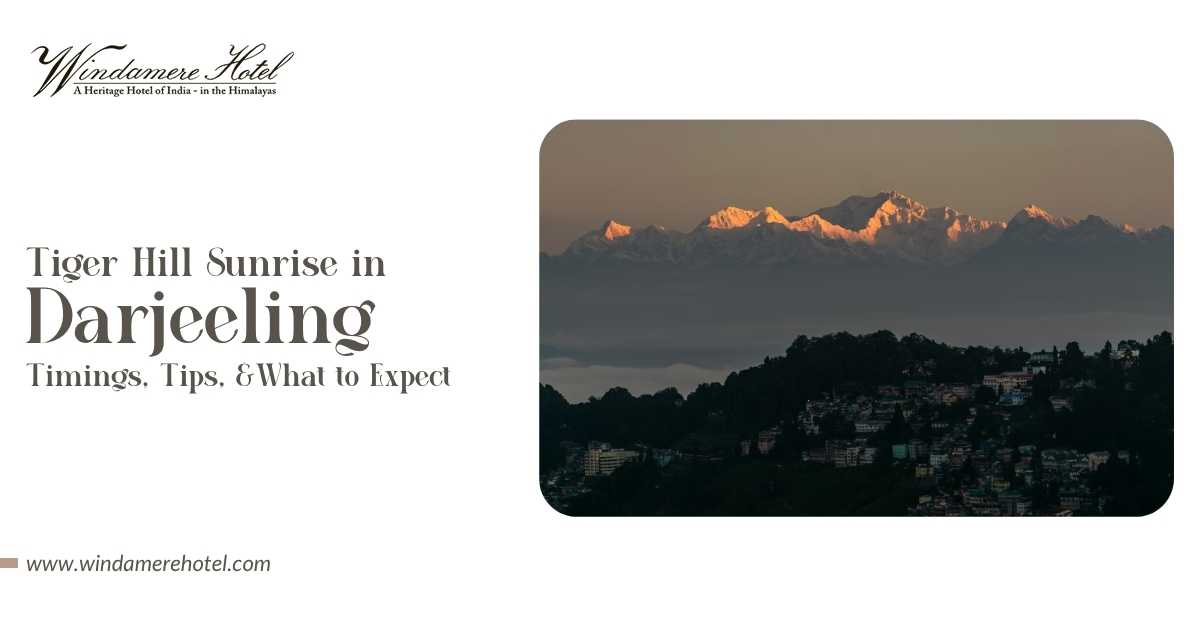
Because of the hill's elevated position, there are opportunities to see jaw-dropping views of the surrounding environment of Darjeeling. One of India's most recognizable mountain views, you can experience the Kanchenjunga range's majestic snow-covered summits on clear days.
For those who relish nature, the surrounding hills, verdant valleys, and shifting mountain clouds offer a stunning scene.
What is the Ideal Time to Enjoy the Views?
Since the post-monsoon weather frequently delivers brighter skies, October and November are especially good months for mountain views. But another great time to explore the hill is from March to May, when the weather is usually good, and the surrounding area comes alive with seasonal foliage.
Heavy clouds and rain can make it difficult to see during the monsoon. However, Observatory Hill has a certain majesty due to its misty atmosphere.
October and November are great months to visit Observatory Hill for the finest overall experience. March through May is also a wonderful option if you want decent walking conditions and moderate temperatures. Because the surroundings are quieter and the atmosphere is more invigorating, early mornings are especially pleasant.
How to Reach Observatory Hill in Darjeeling
Because Observatory Hill is near Chowrasta, one of Darjeeling's most well-known sites, getting there is hassle-free.
From Chowrasta, proceed to the Mahakal Temple by walking up the steep pathway on the eastern side of Mall Road. From the Darjeeling Railway Station, you can walk to Chowrasta after taking a local cab. It’s about a 5- 15-minute uphill walk to the location from Chowrasta.
Final Words
Nature, spirituality, and history are all present at Observatory Hill Darjeeling. Every area of the hill is worthwhile to witness, from the serene strolling path close to Chowrasta to the revered Mahakal Temple and its intriguing Buddhist history.
Experience the best of Darjeeling with a guided trip by Windamere Hotel.
FAQs
1. For what reason is Observatory Hill well-known?
It is famous for its Himalayan views, trekking trails, Buddhist heritage, Mahakal Temple, and religious peace.
2. Which temple is located on Observatory Hill?
The hilltop is home to the well-known Mahakal Temple, which is devoted to Lord Shiva.
3. Is winter a good time to visit Observatory Hill?
While winter is a good time, due to the foggy climate, views can be disrupted.
4. How long does it take to explore Observatory Hill?
Depending on your hiking pace, a leisurely visit usually lasts between 15-20 minutes from Chowrasta.
5. What’s the elevation of Observatory Hill?
The elevation is 2,134 meters.