



With striking spreads of foggy hills, tea gardens, toy trains, and jaw-dropping views of Kanchenjunga, Darjeeling fascinates every traveler. However, the Padmaja Naidu Himalayan Zoological Park, or Darjeeling Zoo, and the Himalayan Mountaineering Institute (HMI), two of its most fulfilling attractions, are nearby on Jawahar Parbat.
Together, these two sites offer a very well-rounded Darjeeling travel experience. You may spot Himalayan-adapted wildlife in the zoo, such as conservation-breeding species and the red panda. The human passion for mountains, climbing, travel, and adventure takes precedence over the natural world at HMI.
Even better, it is simple to combine both attractions into a single sightseeing plan because they are situated in the same general area. To put it simply, HMI helps you comprehend humans' connection with the Himalayas, whereas the zoo allows you to explore the natural Himalayan world.
Why Explore HMI and the Darjeeling Zoo in a Combined Tour?
Padmaja Naidu Himalayan Zoological Park. This combination's contrast is what makes it truly rewarding. The Eastern Himalayan biodiversity is introduced to visitors at the Darjeeling Zoo.
In addition to Himalayan tahr, Himalayan goral, blue sheep, and various pheasant species, the zoo is especially linked to conservation breeding programs. This is for species like the red panda and snow leopard.
Himalayan Mountaineering Institute. On the other hand, the Himalayan Mountaineering Institute narrates the tale of legends who faced such peaks. HMI was established on November 4, 1954, following Tenzing Norgay and Edmund Hillary's historic ascent of Mount Everest.
Since then, the HMI has grown to be an exceptionally vital organization promoting organized mountaineering in India. For many years, Tenzing Norgay maintained a strong relationship with the institute while serving as its Director of Field Training.
A Glimpse of Himalayan Wildlife at the Darjeeling Zoo
Darjeeling Zoo was founded in 1958 and is about 7,000 feet/ 2,150 meters above sea level, which is officially known as the Padmaja Naidu Himalayan Zoological Park. The zoo is especially well-suited for exhibiting high-altitude Himalayan animals due to its location and cool mountain temperature.
The red panda, an animal closely linked to the Eastern Himalayan region, is its key draw. Beyond red pandas, the zoo engages in conservation-breeding activities with snow leopards, Himalayan salamanders, Himalayan wolves, Himalayan tahr, Himalayan goral, blue sheep, and certain pheasant species.
You’ll experience a more mountain-oriented environment due to the hillside location, foliage, and cooler temperatures. If you are a family, a tourist interested in the Himalayan environment, and wildlife enthusiast should plan on spending enough time exploring the zoo.
Darjeeling Zoo Timings & Entry Fees
The zoo's official visitor information currently states that the park is open Monday through Wednesday from 8:30 AM to 4:00 PM and closed on Thursdays. Adult visitors from SAARC and India pay INR 110, while international visitors pay INR 180.
Children under six enter free of charge, and the stated cost of the camera is INR 10. It makes sense to check the official zoo website before you head out for your day of sightseeing in Darjeeling because operating schedules and fees are subject to change.
The Himalayan Mountaineering Institute Brings Darjeeling's Climbing Heritage to Life
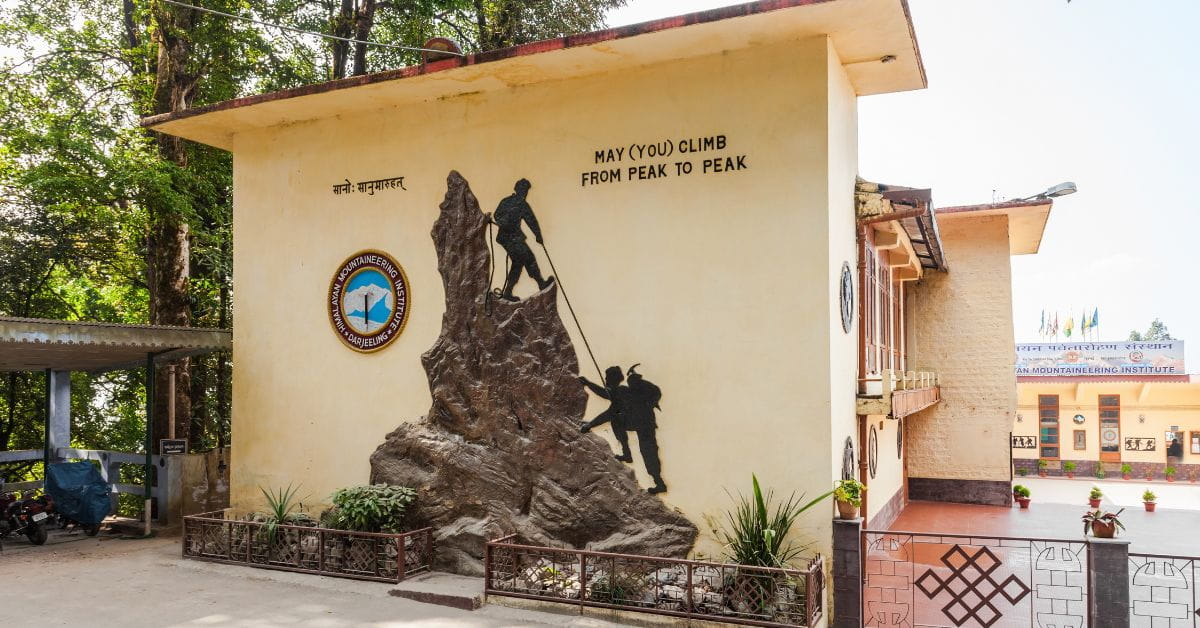
Your perspective on the Himalayan scenery might drastically transform with a quick visit to HMI. After Tenzing Norgay and Edmund Hillary made the first successful ascent of Mount Everest, the institute was founded in 1954.
Tenzing chose Darjeeling in part because it was his hometown and had a long history of Himalayan mountaineering. Later on, HMI developed into an exclusive hub for training and teaching in climbing.
The museum, which was founded in 1957, records local culture, alpine surroundings, and Himalayan mountaineering. Photographs, models, artworks, manuscripts, artifacts, and climbing gear are among its holdings. Mountaineering history, the Everest expedition, and Himalayan living are all covered in special parts of the museum.
The museum, founded in 1957, records local culture, alpine settlement, and Himalayan mountaineering. Photographs, artworks, manuscripts, artifacts, and climbing gear are among its holdings. Mountaineering history, the Everest expedition, and Himalayan living are in special sections of the museum.
Because it links the historic 1953 trip to the development of climbing gear and methods, the Everest segment is especially splendid. Visitors may observe how mountaineering evolved using actual artifacts and historical exhibits rather than just reading about Everest in a textbook.
HMI Timing, Costs, and Planning for Visitors
According to HMI's official website, the institution is open Monday through Saturday from 9:30 AM to 4:30 PM; Sundays and government holidays are closed.
Separate museum entry fees as well as extra fees for movie screenings and climbing activities have been reported in previous HMI reports. However, these statistics are not as accurate as current visitor pricing. Therefore, rather than depending on outdated travel blogs, visitors should check directly with HMI for the current museum entry charge and visitor arrangements before visiting.
How You Can Arrange the Ideal Visit to the Zoo and HMI
Starting in the morning is the simplest strategy.
Recommended Half-Day Schedule:
- Arrive at the Darjeeling Zoo at 8:30 AM
You have a good amount of time to tour the park without hurrying if you start early. For travelers who prefer cooler weather, the morning makes sense as well.
- 10:30–11:00 AM: Complete the Zoo Tour
Before you head to the HMI campus, take a quick rest.
- Try to visit HMI and its museum from 11:00 AM to 1:00 PM
Next, take some time to explore the Himalayan cultural displays, Everest collection, and mountaineering exhibits.
- Lunch and local sightseeing starting at 1:00 PM
You can proceed to other attractions in and around central Darjeeling after your HMI visit.
Nearby Places to Add to Your Darjeeling Tour Plan
You can combine the Zoo and HMI with a number of other Darjeeling experiences, for sure.
Darjeeling Himalayan Railway: If you have extra time, visiting or riding the well-known toy train/ joy ride will give your trip to Darjeeling a whole new delight.
Darjeeling Mall and Chowrasta: Incredible for shopping, cafés, strolls, and leisurely views following a day of touring.
Tiger Hill: If morning views of the Himalayan peaks are a top priority, schedule this separately.
Best Time to Visit
March through early June and late September or early October through January are especially good times to visit the zoo.
Heavy rain and cloud cover during the monsoon season may make it difficult to see mountains and engage in outdoor activities. So, always check the weather update before you plan for Darjeeling tours.
If wildlife is your top priority, pick a season that works for you and get started early (wise to avoid the monsoon). Because mountain weather is never totally predictable, if Himalayan views are your top goal, be flexible with your itinerary.
Final Words
The Himalayan Mountaineering Institute and the Darjeeling Zoo are two incredibly beautiful places to visit. When taken as a whole, they clarify two distinctive aspects of the area, offering a more exclusive Himalayan ardour.
The zoo gives insights into the Himalayan fauna and conservation. The history, bravery, and aspirations of those who braved those mountains are revealed by HMI. Well, for this reason, first-time visitors will find the combination very wholesome. If a luxurious stay is required in Darjeeling to experience this two spots, the Windamere Hotel is a good choice.
Explore the best of Darjeeling Zoo experiences with the HMI in a single tour.
FAQs
1. What does the Darjeeling Zoo have to offer?
Snow leopards and red pandas are examples of rare Himalayan wildlife.
2. What makes the Himalayan Mountaineering Institute unique?
It features Himalayan adventures, equipment, and the history of climbing.
3. How close are the Zoo and HMI to one another?
They are conveniently close to one another.
4. How much time should I budget for each?
For a leisurely visit, 3 to 4 hours is excellent.
5. Can families use this combo?
Of course! All ages will find it entertaining and instructive on their Darjeeling vacation.
6. When is the ideal time to go?
In general, comfortable sightseeing is best done in the morning.